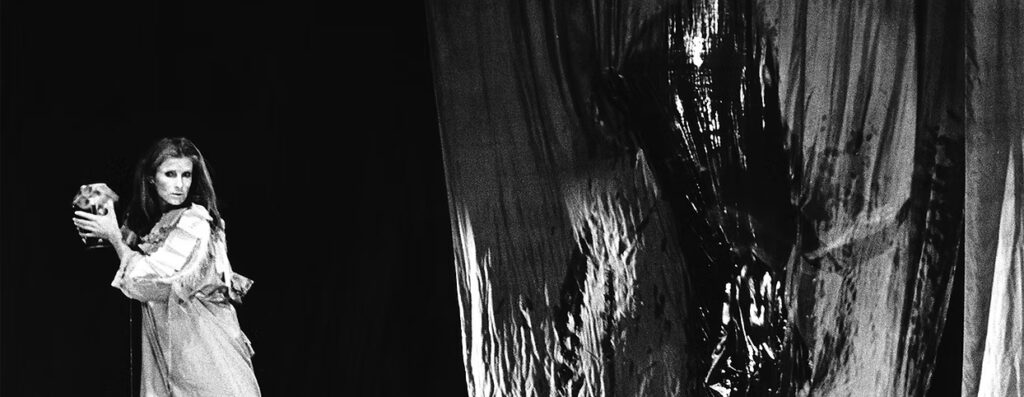
Photographer: Regis Lansac
Images held in the Entr’acte Archives
The joy of performance is about engaging in the actor-audience relationship and being aware of the interplay between performers on stage. An Entr’acte performance was never dialogic. Much was wordless. The audience was invited to exercise their critical imagination, as had the creative team in the rehearsal process. Original music compositions were not designed to provide a rhythm as they might in dance but rather another layer of underscoring the theme. The performers knew audiences might be tempted to ‘receive’ the corporeal work as a display of feelings or emotions. Instead, they focused on their craft: their relative positions on stage and their muscular play (not display). When the poetics of style is at the core of theatre performance, the actor invites the audience to go beyond witnessing feelings and consider ideas. How do they make sense of it?
Influence of performing on Embodied Thinking
In the middle chapter, Elisabeth accepts an invitation from Bing and Decroux – two living presences – to meet in Paris. Responding to their request to present a ‘big idea’, she shares thoughts about the ‘Body as Mask’.
In their creative years, her French hosts had thought deeply about the body both in art and society. Embodied Thinking reveals movement artists as people who use imagination not to escape the ‘real world’ but to engage more deeply with it. Imagination is like a muscle: to keep it, use it.
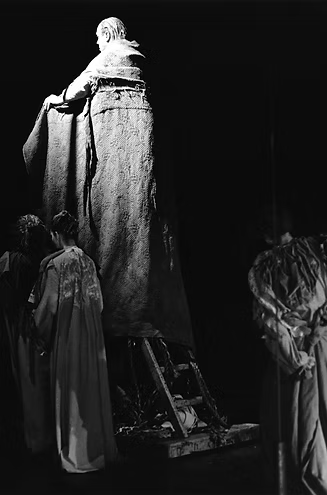
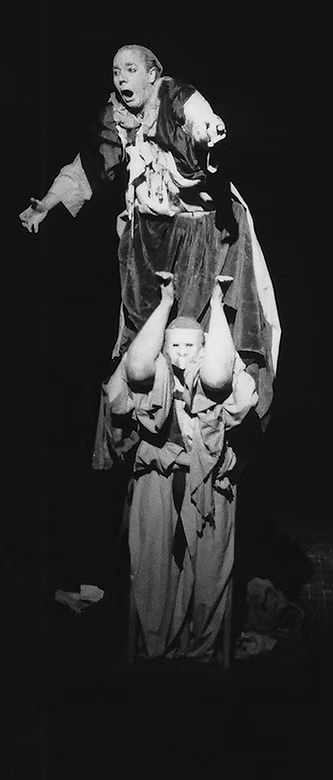
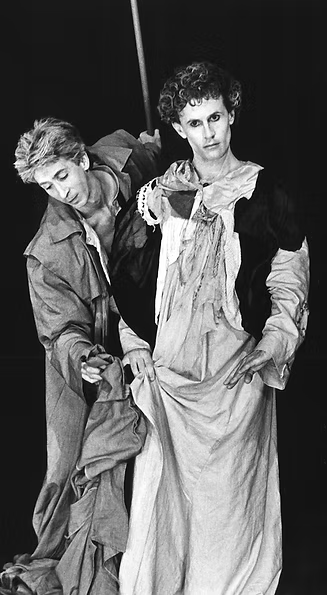
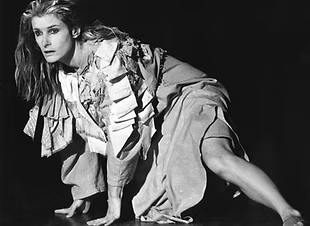
Ostraka (1986-88)
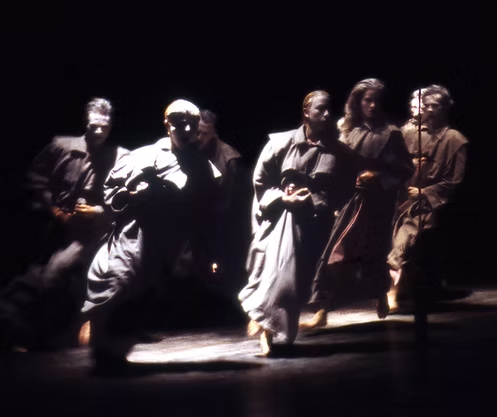
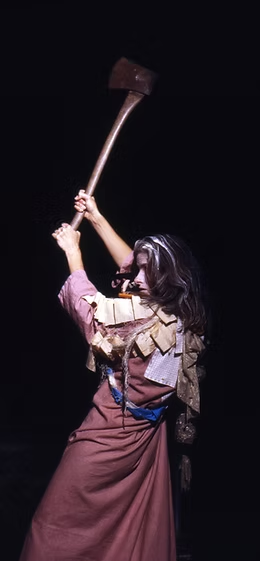
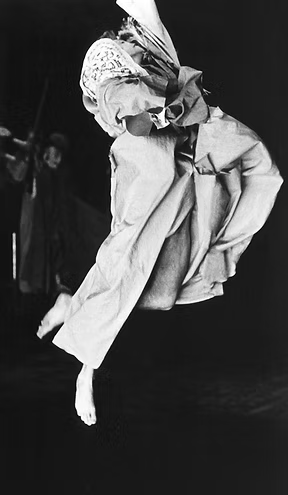
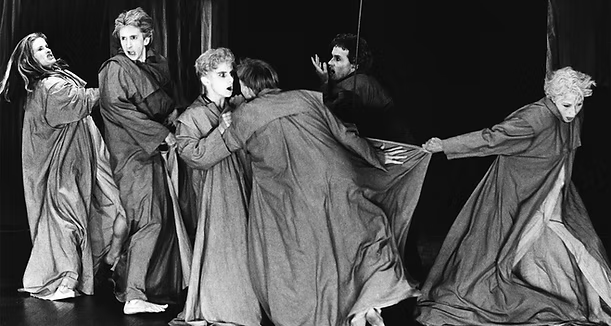
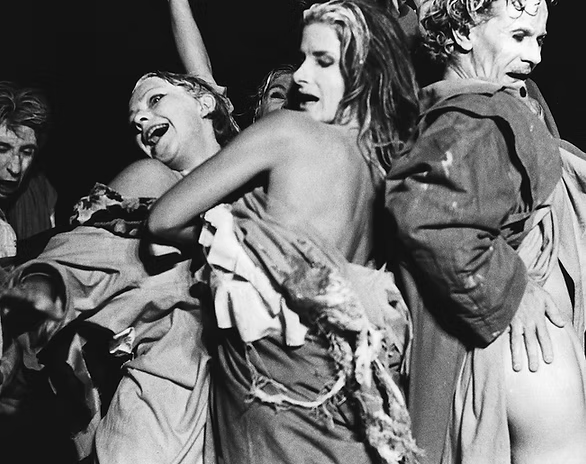
Photographer: Regis Lansac
Images held in the Entr’acte Archives
Centrestage October 1986
Entr’acte has a well-earned reputation for intelligent explorations into the possibilities of performance starting from corporeal mime. Ostraka …(is) splendid theatre… a rich work – comic, erotic, savage – and performed with great discipline.
Jill Sykes, The Sydney Morning Herald
Ostraka is a powerful new piece from Entr’acte Theatre…Thibaudeau breaks new ground for Entr’acte without discarding the group’s stylish sophistication and polished expertise…there is a unity of purpose and direction which drives Ostraka to build up to a powerful impact.
Bill Harpe, Arts Guardian, (Manchester) Sept.19, 1988
The kaleidoscope of images…all arrive from the deep well of Greek theatre, from the violent death of Agamemnon at the hands of Clytemnestra…It is perhaps no accident that this company of visual musicians–whose instruments are their bodies–hails from Australia. It may be that this is one ideal location from which to preview European culture.
Jess Walker, Tribune, Aug.26, 1987
…A woman runs across the stage towards a mirror with an axe, raising the expectation of a violent act. She stops short of the mirror, turns to the audience and smiles. Our anticipation is subverted, and we are made to acknowledge our conditioned response.
The audience is constantly reminded that we are voyeurs. The performers refer to us, compel our participation in their enactment of our emotions, our responses. We are the “Gentlemen of the Jury” to whom Clytemnestra states her case, who are titillated by the details yet decree her punishment.
We are also the character who sits at the front of the stage, painting his or her face white, intent on the mirror image. The images, rituals and emotions expressed on stage are our reflections, fascinating but repulsive.
Refractions (1983-87)
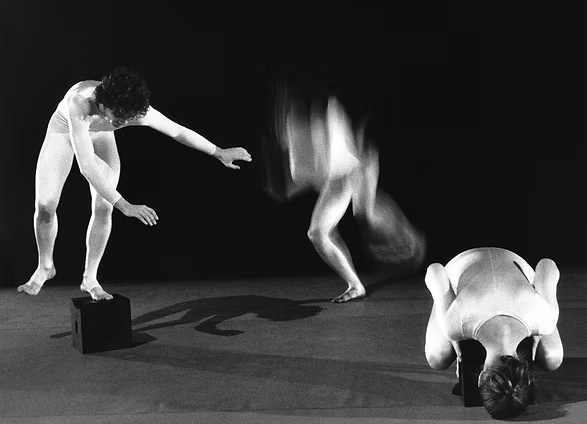
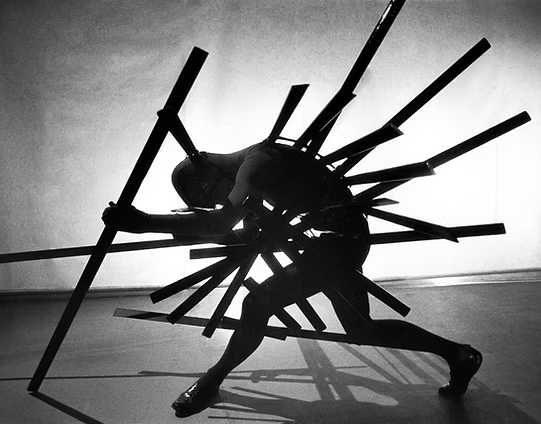
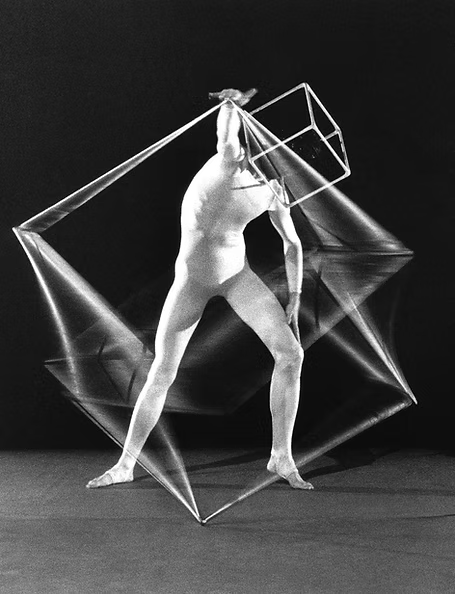
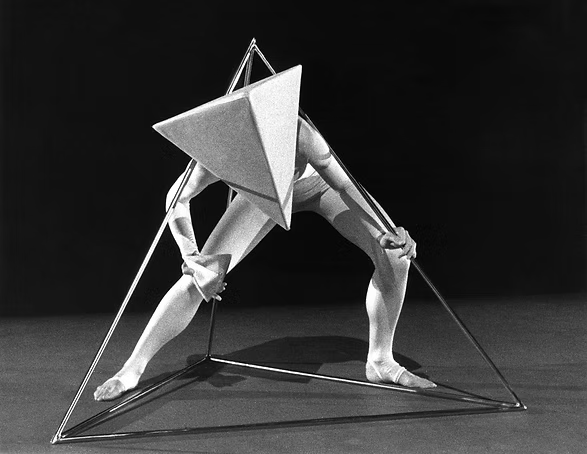
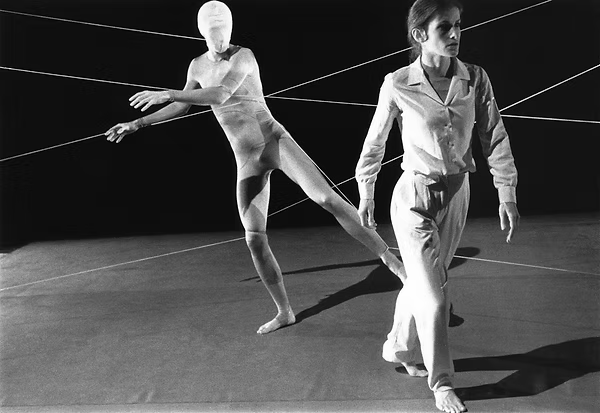
Photographer: Catherine De Lorenzo
Images held in the Entr’acte Archives
Rachael Kerr, The Mercury, Tasmania, July 8, 1985
Entr’acte’s language of corporeal mime shattered any preconceptions the audience may have had of traditional mime. The performance was a profusion of ideas in design and movement and a celebration of the human spirit through an exploration of the human mind. Mime and movement were transformed into visual theatrical poetry and images and symbols were woven together in elegant and eloquent concepts.
Mary Emery, The Australian, Sept 19.1983
The Bauhaus imagination has been used as a starting point or visual reference for the group to develop an entirely new image…Entr’acte’s work is notable for its conceptual imagination, ability to use space, strong sense of form and shape and its excellent design. It would put many of our more established groups to shame.
Jill Sykes, The Sydney Morning Herald, June 2, 1984
Outstandingly good…an evening of beautiful and stimulating entertainment…although their art form is stylised and strictly structured, Refractions never looks like an exercise. The ideas spill over in all kinds of ways, from a barely perceptible shiver that represents a zephyr’s breath, to a giant-size cat’s cradle.
Furnau Hall, The Daily Telegraph, London, Jan 19, 1985
The Australian mime company Ent’acte, founded by Elisabeth Burke and Pierre Thibaudeau in 1979, gave a performance last night at The Place as part of the International Mime Festival of the programme “Refractions” which clearly established this company as one to be reckoned with, not just in the Australian context but internationally.
All three of the excellent items in the second half showed the same inventiveness and the same combination of abstract geometry, imaginatively designed props and charming human situations which seems to be characteristic of the approach to mime which this company is developing.
The Last Circus (1988)
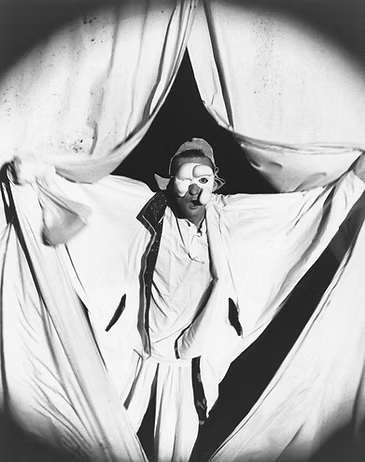
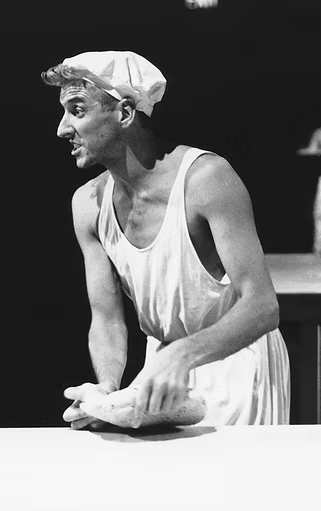
Photographer: Regis Lansac
Images held in the Entr’acte Archives
Susan Ryan, On the Street, Feb.24, 1988
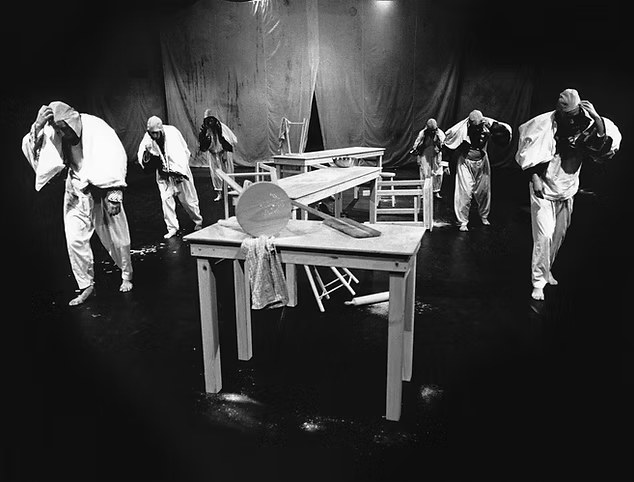
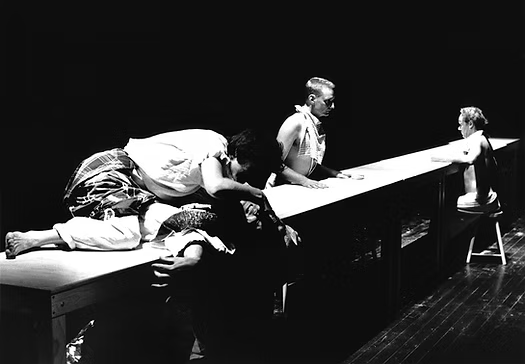
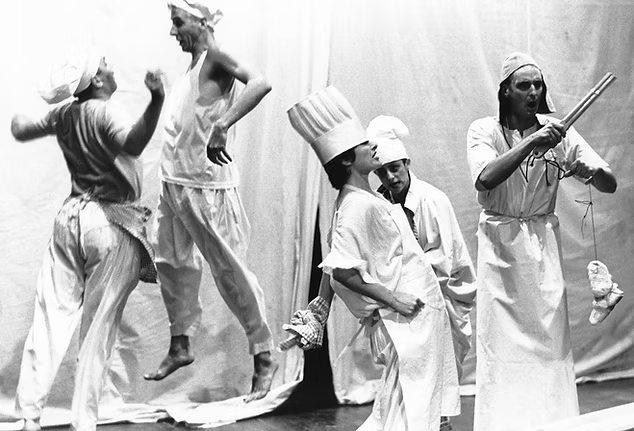
Entr’acte have done it again – come up with a mind-blowing concoction of theatre, dance, mime and thought that puts almost every other show in town to shame. They deal in metaphors and small miracles of everyday existence…everything about this play is at once simple to the point of foolishness, and incredibly emotive.
Jill Sykes, The Sydney Morning Herald, Feb.22, 1988
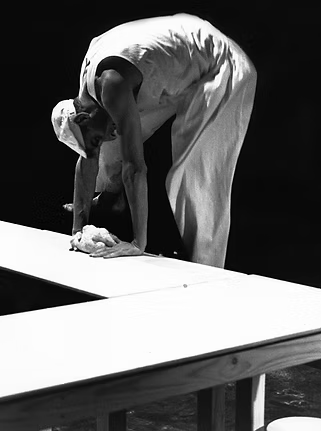
What impressed and delighted me about The Last Circus was the detail. Entr’acte had a residency in Indonesia last year, and reminders of it can be found in the eye-catching fabrics…masks…music and in a memorable segment of Pierre Thibaudeau’s performance. There is so much finesse in his way of moving that he, more than any other performer, is able to convey comedy through the actual lines and stance of his body. Stylised to a point somewhere between commedia dell-are and Javanese dance, his comic interludes were a highlight. So were those of Bob Burton, in a completely different way…he uses his exceptional athleticism to knead that dough bodily in a stunning display of gymnastics.
On Archeology (1986)
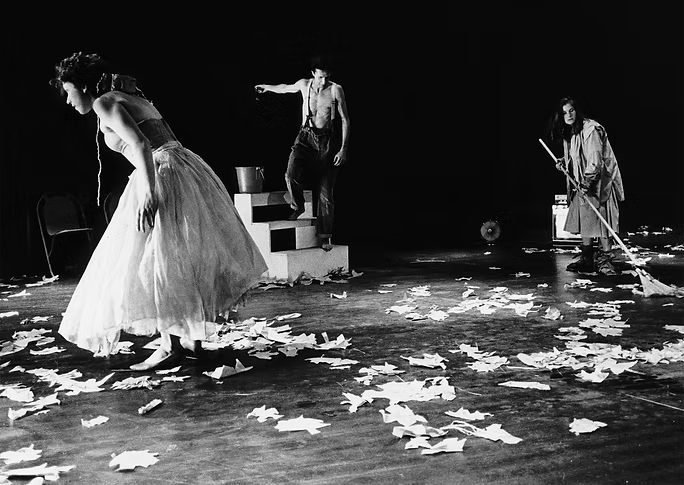
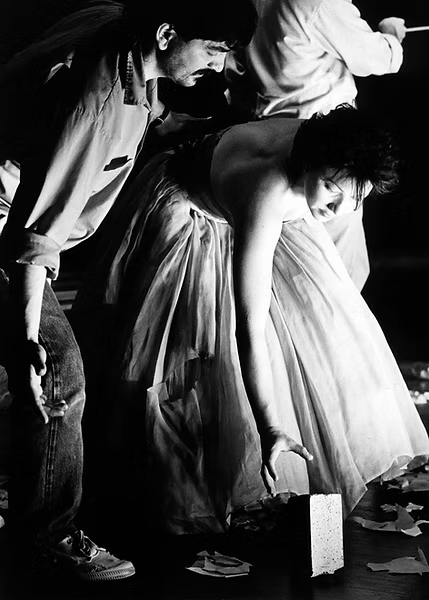
Photographer: Regis Lansac
Images held in the Entr’acte Archives
Andrew L. Urban, The Australian, Oct.30, 1986
Anarchic theatre is more or less at home at The Performance Space…a theatre for…companies which have no foothold in the mainstream. Entr’acte is one such company, although it has behind it some notable successes and a vigorous spirit of adventure. It was always a hybrid group blurring the boundaries of dance and theatre with corporeal mime and soundscapes. The first work (On Archeology) in particular is revolutionary, in that Tsoutas not only ignores fundamental theatrical tradition but attacks it…Thibaudeau’s piece (Ostraka) offers a contrast, but not in its iconoclasm. He too searches for new forms in theatre, but his images are more fluid and lyrical…a bloodless theatrical coup: don’t go expecting the predictable.
Inner-City Voice, November 1986
Entr’acte has put together two brilliant experimental theatre works under the generic title ARCHEOLOGIC. Both works essentially deal with the mystique of spiritual exile, but from opposed emotional positions and differing theoretical perspectives.
Tsoutas’ impact is roughly the sort Goddard used to specialise in, a style that hits the audience at all those ‘irritating’ points that can make sitting through a performance a physical discomfort….His is a talent which knows how to bring home the nightmare quality of prosaic events which assume metaphysical status by virtue of the fact that they keep repeating.
Thibaudeau’s Ostraka displays a glossiness of ironic sophistication…the range of options it offers an audience marks Ostraka as a very powerful piece indeed.